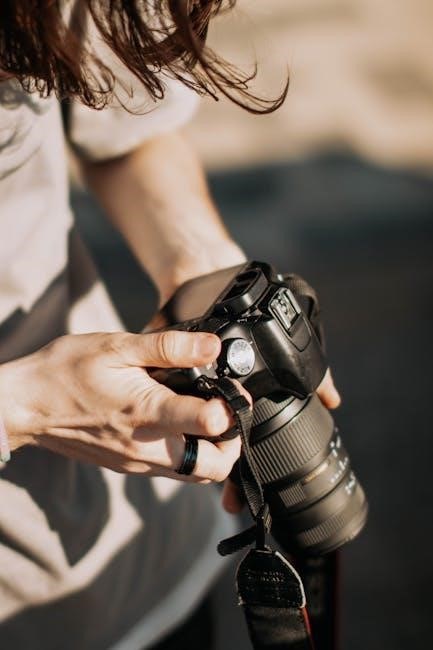
The Canon PowerShot SX20 IS offers extensive manual control‚ appealing to photographers desiring creative flexibility beyond automatic settings․ This camera’s manual mode allows
precise adjustments to aperture‚ shutter speed‚ and ISO․ Users can explore advanced focusing techniques‚ and achieve professional-quality images․ The SX20 IS’s manual focus is relatively easy to use․
Overview of the SX20 IS
The Canon PowerShot SX20 IS‚ released in 2009‚ is a versatile bridge camera known for its 20-megapixel sensor and impressive 28-560mm zoom lens․ It features manual controls‚ appealing to enthusiasts seeking greater photographic control․ The SX20 IS boasts a tilting 3․0-inch LCD screen and optical image stabilization․
Notably‚ it includes manual focusing capabilities‚ a feature appreciated by users․ While older‚ it remains a capable camera for those learning manual settings․ Its fixed lens offers a substantial zoom range‚ and the camera supports various shooting modes‚ including full manual operation for aperture and shutter speed adjustments․
Why Use Manual Mode?
Employing manual mode on the Canon PowerShot SX20 IS unlocks complete creative control over your images․ Automatic modes can sometimes misinterpret scenes‚ leading to suboptimal results․ Manual control allows photographers to intentionally manipulate depth of field using aperture‚ freeze motion with shutter speed‚ and manage noise with ISO․
Furthermore‚ manual focus provides precision beyond autofocus‚ especially in challenging conditions․ Mastering manual settings fosters a deeper understanding of photographic principles‚ ultimately enhancing your skills and artistic vision․ It’s essential for consistent results and unique stylistic choices․

Understanding the SX20 IS Controls for Manual Operation
The SX20 IS features a mode dial for selecting manual settings‚ a navigable menu system‚ and dedicated function buttons․ These controls facilitate precise adjustments for optimal image capture․
Mode Dial and Manual Settings
The Canon PowerShot SX20 IS utilizes a prominent mode dial to access its manual settings․ Rotating the dial to ‘M’ activates full manual control‚ granting photographers complete authority over aperture‚ shutter speed‚ and ISO․ This allows for tailored exposure based on creative vision and shooting conditions․ The dial’s clear labeling ensures easy navigation․
Within manual mode‚ adjustments are made using the directional buttons and control wheel․ These controls provide granular adjustments‚ essential for achieving desired photographic effects․ Mastering the mode dial is fundamental to unlocking the SX20 IS’s full potential for manual operation․
Navigating the Menu System
The Canon PowerShot SX20 IS’s menu system is crucial for accessing advanced manual settings․ Pressing the ‘FUNC’ button reveals frequently used options on-screen‚ streamlining adjustments․ Deeper customization resides within the full menu‚ accessed via the menu button․
The menu is logically organized into sections‚ including image quality‚ shooting functions‚ and setup․ Utilizing the directional buttons allows for easy scrolling and selection․ Familiarizing oneself with the menu structure is vital for fine-tuning the camera’s performance in manual mode and unlocking its full potential․
Function Buttons and Their Roles
The Canon PowerShot SX20 IS features several function buttons vital for manual operation․ The ‘FUNC’ button provides quick access to frequently used settings like ISO‚ white balance‚ and picture style․ The directional buttons navigate menus and adjust values․ The ‘SET’ button confirms selections‚ while the ‘DISPLAY’ button toggles information overlays․
Understanding each button’s role streamlines workflow in manual mode․ Customizing these functions‚ where possible‚ further enhances efficiency․ Mastering these controls allows photographers to react swiftly to changing conditions and maintain creative control․
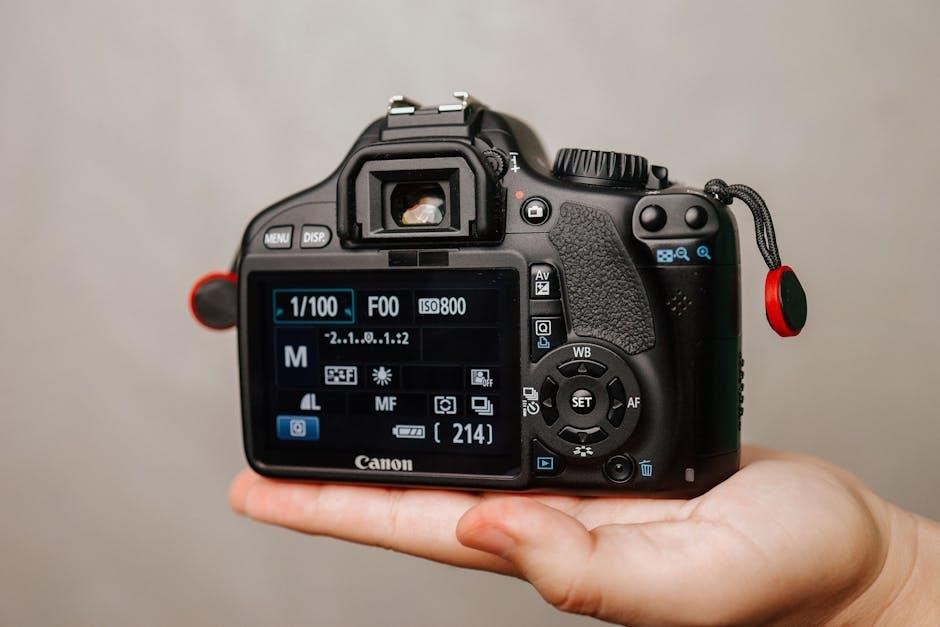
Mastering Exposure in Manual Mode
Achieving proper exposure with the Canon PowerShot SX20 IS in manual mode requires balancing aperture‚ shutter speed‚ and ISO sensitivity․ These three elements work together to control light reaching the sensor․
Aperture Control (F-stop)
Aperture‚ measured in f-stops‚ controls the lens opening size‚ influencing both light intake and depth of field․ A lower f-stop (e․g․‚ f/2․8) creates a shallow depth of field‚ ideal for portraits with blurred backgrounds․ Conversely‚ a higher f-stop (e․g․‚ f/8) yields greater depth of field‚ suitable for landscapes where sharpness throughout the scene is desired․
The Canon PowerShot SX20 IS offers a variable aperture‚ ranging from f/2․8 to f/5․7 at its widest zoom setting․ Understanding how aperture affects your images is crucial for creative control․ Experimenting with different f-stops allows photographers to manipulate focus and artistic expression․
Shutter Speed Control
Shutter speed dictates how long the camera’s sensor is exposed to light‚ measured in seconds or fractions of a second․ Faster shutter speeds (e․g․‚ 1/1000s) freeze motion‚ perfect for capturing fast-moving subjects like sports or wildlife․ Slower shutter speeds (e․g․‚ 1/30s) allow more light in‚ useful in low-light conditions‚ but can introduce motion blur․
The Canon PowerShot SX20 IS provides a shutter speed range‚ enabling control over motion and exposure․ Mastering shutter speed is vital for achieving desired effects․ Experimentation is key to understanding its impact on image clarity and artistic vision․
ISO Sensitivity Settings
ISO controls your camera’s sensitivity to light․ Lower ISO settings (e․g․‚ ISO 100) produce cleaner images with less noise‚ ideal for bright conditions․ Higher ISO settings (e․g․‚ ISO 800‚ 1600) increase sensitivity‚ allowing shooting in darker environments‚ but introduce more digital noise or grain․
The Canon PowerShot SX20 IS offers adjustable ISO settings․ Balancing ISO with aperture and shutter speed is crucial for proper exposure․ Understanding the trade-off between brightness and image quality is essential for manual mode success․

Focusing Techniques in Manual Mode
Manual focus on the Canon PowerShot SX20 IS requires precise adjustments․ Utilize focus lock and recomposition for off-center subjects‚ and zoom for accuracy․
Manual Focus Operation
The Canon PowerShot SX20 IS’s manual focus is activated via the mode dial․ Once selected‚ use the directional buttons to fine-tune focus․ The screen displays magnification for critical sharpness assessment․ Achieving precise focus demands patience and practice‚ especially with moving subjects․ Remember that the SX20 IS’s manual focusing is relatively easy to use‚ offering a direct connection between photographer and image․
Carefully observe the image on the LCD screen‚ adjusting until the desired area appears sharp․ Zooming in during manual focus enhances precision․ This method provides complete control‚ bypassing the camera’s autofocus system․
Focus Lock and Recomposition
Focus Lock and Recomposition is a valuable technique with the Canon PowerShot SX20 IS․ First‚ center the focus point on your subject and half-press the shutter button to lock focus․ While maintaining the half-press‚ recompose the shot to your desired framing․ This method is useful when the autofocus struggles or when you need precise control over the focal point․
Be mindful that significant recomposition can slightly alter the focal plane‚ potentially causing minor softness․ Practice this technique to master its nuances and achieve consistently sharp results․
Utilizing Zoom for Precise Focus
The Canon PowerShot SX20 IS’s zoom function aids in achieving accurate manual focus․ Zooming in on your subject magnifies the image‚ making fine adjustments easier to discern․ Carefully rotate the focus ring until the desired area appears sharp on the LCD screen․ Once sharp focus is attained‚ slowly zoom back out to your preferred composition․
This technique is particularly effective for macro photography or when focusing on small‚ distant objects․ Remember to check focus critically at full composition‚ as zooming can sometimes introduce slight shifts․

Advanced Manual Settings and Features
The Canon PowerShot SX20 IS provides advanced features like white balance adjustment‚ metering mode selection‚ and customizable picture styles․ These tools empower photographers to refine image aesthetics and achieve desired results․
White Balance Adjustment
White balance is crucial for accurate color rendition in the Canon PowerShot SX20 IS․ Manual white balance allows photographers to counteract color casts caused by different lighting conditions․ The SX20 IS offers presets like Daylight‚ Cloudy‚ and Tungsten‚ but custom white balance provides ultimate control․
To set a custom white balance‚ navigate to the menu‚ select the white balance setting‚ and then point the camera at a white or gray card under the current lighting․ This ensures colors are rendered naturally‚ avoiding unwanted tints․ Mastering white balance enhances image quality significantly․
Metering Modes Explained
The Canon PowerShot SX20 IS offers several metering modes influencing exposure calculation․ Evaluative metering analyzes the entire scene for balanced exposure‚ suitable for most situations․ Partial metering focuses on a smaller central area‚ useful for backlit subjects․ Spot metering measures light from a very small point‚ ideal for precise exposure control․
Understanding these modes is vital for manual operation․ Evaluative is a good starting point‚ while partial or spot metering allows for targeted exposure adjustments‚ preventing over or underexposure in challenging lighting scenarios․ Experimentation is key to mastering these settings․
Picture Style Options
The Canon PowerShot SX20 IS features Picture Styles‚ pre-set image processing parameters influencing color‚ contrast‚ and sharpness․ Options include Standard for natural results‚ Portrait for skin tone optimization‚ Landscape for vibrant colors‚ Neutral for minimal processing‚ and Faithful for accurate reproduction․
These styles offer creative control without complex adjustments․ Users can customize each style further‚ adjusting sharpness‚ contrast‚ color saturation‚ and tone․ Experimenting with Picture Styles allows photographers to achieve desired aesthetics directly within the camera‚ enhancing images․

Troubleshooting Common Manual Mode Issues
Manual mode challenges can include blurry images‚ over/underexposure‚ and autofocus override․ Correct exposure settings‚ stable shooting‚ and proper focus techniques resolve these issues effectively․
Blurry Images – Causes and Solutions
Blurry images in manual mode often stem from incorrect shutter speed selection․ A slow shutter speed introduces motion blur‚ especially when handholding the Canon PowerShot SX20 IS․ Ensure your shutter speed is sufficiently fast to counteract camera shake and subject movement․
Additionally‚ improper focusing is a frequent culprit․ Verify accurate manual focus‚ utilizing zoom for precision․ If using focus lock‚ recompose carefully to maintain sharpness․ Finally‚ consider aperture settings; a narrow aperture (high f-stop) increases depth of field but can exacerbate blur if focus is off․
Overexposed or Underexposed Photos
Overexposed photos‚ appearing washed out‚ indicate too much light reached the sensor․ In manual mode on the Canon PowerShot SX20 IS‚ reduce aperture (increase f-stop) or increase shutter speed to limit light intake․ Conversely‚ underexposed photos‚ appearing dark‚ signify insufficient light․
To correct underexposure‚ widen the aperture (decrease f-stop) or slow down the shutter speed․ Remember to adjust ISO sensitivity as needed‚ but be mindful that higher ISO introduces noise․ Utilize the camera’s histogram for accurate exposure assessment․
Autofocus Override in Manual Focus
While utilizing manual focus on the Canon PowerShot SX20 IS‚ the autofocus system can sometimes unexpectedly engage․ This override can disrupt precise focusing‚ especially during critical shots․ To minimize this‚ ensure the mode dial is firmly set to ‘M’ (Manual)․
Carefully disable any autofocus assist features within the camera’s menu․ Regularly check focus confirmation on the LCD screen․ If autofocus activates‚ immediately disengage it and resume manual adjustments․ Practice deliberate focusing movements to maintain control․

Practical Applications of Manual Mode
Manual mode on the Canon PowerShot SX20 IS excels in diverse scenarios․ Landscape‚ portrait‚ and low-light photography benefit from customized settings‚ yielding artistic control and superior image quality․
Landscape Photography
Utilizing manual mode for landscape photography with the Canon PowerShot SX20 IS unlocks stunning detail and dynamic range․ Prioritize a smaller aperture (higher f-stop‚ like f/8 to f/16) to maximize depth of field‚ ensuring sharpness from foreground to background․
Employ a lower ISO setting (typically 100) to minimize noise and preserve image clarity․ Shutter speed will adjust accordingly‚ potentially requiring a tripod for stability in lower light․ Careful metering is crucial for balanced exposure‚ capturing the full beauty of the scene․
Portrait Photography
Manual mode on the Canon PowerShot SX20 IS excels in portraiture‚ offering control over depth of field and subject isolation․ A wider aperture (lower f-stop‚ like f/2․8 to f/5․6) creates a shallow depth of field‚ beautifully blurring the background and emphasizing the subject․
Maintain a reasonable ISO to balance image quality and shutter speed․ Focus precisely on the subject’s eyes for sharp‚ engaging portraits․ Experiment with different metering modes to ensure proper skin tone rendition and avoid over or underexposure․
Low-Light Photography
The Canon PowerShot SX20 IS in manual mode is capable in low-light situations‚ but requires careful settings adjustments․ Increase the ISO sensitivity‚ but be mindful of potential noise at higher values․ Utilize a wider aperture to allow more light to reach the sensor‚ shortening the necessary shutter speed․
Employ a tripod to prevent blur when using slower shutter speeds․ Manual focus can be beneficial in dimly lit environments where autofocus struggles․ Experiment with white balance to accurately capture colors under artificial lighting․

Battery Considerations for Extended Use
The Canon PowerShot SX20 IS utilizes the ED05F-08-8 Lithium-Ion battery․ Conserve power by minimizing LCD brightness and utilizing the camera’s auto power-off feature for longer shooting sessions․
Battery Type and Capacity (ED05F-08-8 Lithium-Ion)
The Canon PowerShot SX20 IS is powered by the ED05F-08-8 Lithium-Ion rechargeable battery․ Specifications indicate a potential capacity of 2․5AH‚ though actual performance can vary․ Users report observing 15 cells within the battery pack․ It’s crucial to use a Canon-approved charger to ensure optimal battery health and prevent damage․ Proper charging practices extend the battery’s lifespan‚ allowing for extended shooting during manual mode exploration and on-location photography‚ like documenting fishing trips on Cannon Lake․
Power Saving Tips
To maximize battery life with your Canon PowerShot SX20 IS‚ utilize the auto power management features․ Enable the sleep mode to automatically shut off the LCD after a period of inactivity․ Reduce LCD brightness and disable features like image stabilization when not essential․ Minimize the use of the zoom function‚ as it consumes significant power․ When using manual mode extensively‚ consider carrying a spare‚ fully charged ED05F-08-8 Lithium-Ion battery for uninterrupted shooting‚ especially during extended outdoor sessions․
Battery Life Expectations
The Canon PowerShot SX20 IS‚ utilizing the ED05F-08-8 Lithium-Ion battery‚ typically provides around 300 shots per full charge under standard usage conditions․ However‚ frequent use of manual mode‚ LCD screen‚ zoom‚ and image stabilization will significantly reduce battery life․ Expect considerably fewer shots during prolonged outdoor shoots or in cold weather․ A spare battery is highly recommended for extended photography sessions‚ ensuring uninterrupted operation and creative exploration of manual settings․

Canon Lake and Fishing Applications
The Canon PowerShot SX20 IS is suitable for documenting fishing trips on Cannon Lake‚ capturing catches and scenic views․ Its manual mode allows control in varying light conditions․
Using the SX20 IS for Fishing Documentation
The Canon PowerShot SX20 IS excels at documenting fishing experiences‚ offering manual control for challenging conditions․ Utilize manual focus for sharp images of catches‚ compensating for movement․ Adjust aperture for depth of field‚ showcasing both the fish and surrounding scenery․ Shutter speed control freezes action shots of casts or jumping fish․
Employ ISO settings to manage low-light situations during dawn or dusk fishing․ The SX20 IS’s zoom facilitates detailed shots of lures or fish features․ Remember to review images immediately to confirm proper exposure and focus‚ ensuring memorable documentation of your angling adventures․
Camera Use on Cannon Lake
The Canon PowerShot SX20 IS is well-suited for capturing Cannon Lake’s beauty‚ but manual mode is key for varied conditions․ Utilize manual focus to overcome distance challenges when photographing wildlife or anglers․ Adjust aperture for expansive landscape shots or shallow depth of field portraits․ Control shutter speed to freeze boat wakes or create motion blur effects․
Manage light variations – early mornings or cloudy days – with ISO adjustments․ The zoom lens helps capture distant details․ Remember to protect the camera from spray and consider a waterproof case for boat use on Cannon Lake․
Comparison with Similar Canon PowerShot Models (SX40)
The SX40 IS builds upon the SX20 IS‚ offering enhanced zoom and improved manual controls․ Both cameras feature manual focus‚ but the SX40 provides a brighter viewfinder and faster operation․
SX20 IS vs․ SX40 IS – Key Differences
Comparing the SX20 IS and SX40 IS reveals several key distinctions․ The SX40 boasts a significantly longer zoom range (50x versus 28-560mm)‚ offering greater reach for distant subjects․ While both support manual focus‚ the SX40’s implementation feels more responsive․
Furthermore‚ the SX40 features a higher resolution sensor‚ resulting in more detailed images․ It also includes a brighter electronic viewfinder‚ aiding composition in bright sunlight․ The SX20 IS remains a capable camera‚ but the SX40 provides a more advanced and versatile shooting experience‚ particularly for those prioritizing zoom and image quality․
Upgrading from the SX20 IS
Considering an upgrade from the SX20 IS? The SX40 IS presents a logical step‚ offering substantial improvements in zoom capability and image resolution․ Newer models provide enhanced low-light performance and faster autofocus systems․ However‚ the SX20 IS remains a functional camera‚ especially for those comfortable with manual controls․
Evaluate your shooting needs; if extended zoom or higher detail are crucial‚ upgrading is worthwhile․ Otherwise‚ mastering the SX20 IS’s manual mode can still yield excellent results․ Remember to explore online resources and video tutorials to maximize your photographic potential․
Resources and Further Learning
Expand your SX20 IS knowledge through Canon’s official support website and vibrant online forums․ Numerous video tutorials demonstrate manual mode techniques‚ enhancing your photographic skills․
Canon’s Official Support Website
Canon’s official website is the primary resource for comprehensive SX20 IS support; Here‚ you’ll find the complete user manual available for download in PDF format‚ detailing every function and setting․
Explore frequently asked questions (FAQs) addressing common issues and troubleshooting steps․ Access driver and software updates to ensure optimal camera performance․ The site also provides contact information for Canon’s customer support team‚ offering assistance via phone or email․
Detailed specifications and product information are readily available‚ solidifying your understanding of the SX20 IS’s capabilities․
Online Forums and Communities
Numerous online forums and communities are dedicated to Canon PowerShot cameras‚ including the SX20 IS․ These platforms offer a valuable space to connect with fellow enthusiasts‚ share experiences‚ and seek advice․
Users frequently discuss manual mode techniques‚ troubleshooting tips‚ and creative approaches․ Websites like photography-specific forums and Reddit’s photography subreddits host active discussions․
You can find solutions to specific problems‚ learn from others’ expertise‚ and showcase your own photos․ These communities foster a collaborative learning environment for SX20 IS users․
Video Tutorials for the SX20 IS
Visual learners will benefit from the abundance of video tutorials available online for the Canon PowerShot SX20 IS․ Platforms like YouTube host numerous guides covering manual mode operation‚ focusing techniques‚ and advanced settings․ These videos often demonstrate practical examples‚ making complex concepts easier to grasp․
Many tutorials specifically address manual focus‚ a feature praised by SX20 IS owners․ Searching for “Canon SX20 IS manual mode tutorial” yields helpful results‚ offering step-by-step instructions and visual aids․