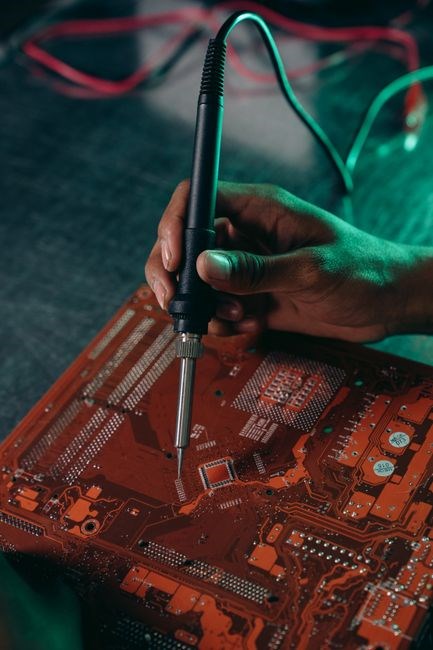
The art of electronics pdf guides readers through foundational principles, practical circuits, and modern design techniques. It blends theory with hands‑on examples, enabling designers to prototype, analyze, and iterate. This resource empowers both novices and seasoned engineers. It offers guidance for each project
Historical Context
From the earliest spark of curiosity to the sophisticated microarchitectures that define today’s digital landscape, the evolution of electronics has been a relentless march of ingenuity. The first tangible steps were taken in the late 19th century when pioneers like Thomas Edison and Nikola Tesla harnessed electromagnetism to power the world. Their experiments with vacuum tubes and early radio transmitters laid the groundwork for the modern circuitry that would follow. As the 20th century progressed, the invention of the transistor in 1947 by Bardeen, Brattain, and Shockley revolutionized the field, shrinking devices from bulky tubes to compact, reliable components that could be mass‑produced. This breakthrough ushered in the era of integrated circuits, allowing thousands of transistors to be embedded on a single silicon wafer, a concept that would later give rise to the microprocessor and the personal computer revolution of the 1970s and 1980s. The 1990s saw the advent of digital signal processing, where algorithms began to replace analog filters, enabling unprecedented precision in audio, video, and communication systems. Today, the convergence of embedded systems, the Internet of Things, and artificial intelligence has transformed electronics from a purely hardware discipline into a multidisciplinary field that intertwines software, hardware, and data science. The art of electronics pdf captures this rich tapestry, offering readers a curated journey through the milestones that have shaped the industry, while providing practical insights that bridge historical theory and contemporary application. By studying these developments, engineers can appreciate the lineage of concepts that underpin modern design, fostering a deeper understanding of why certain technologies persist and how they can be innovated upon in the future. Its coverage equips readers with theory, hands‑on practice, and insight.
Purpose and Scope
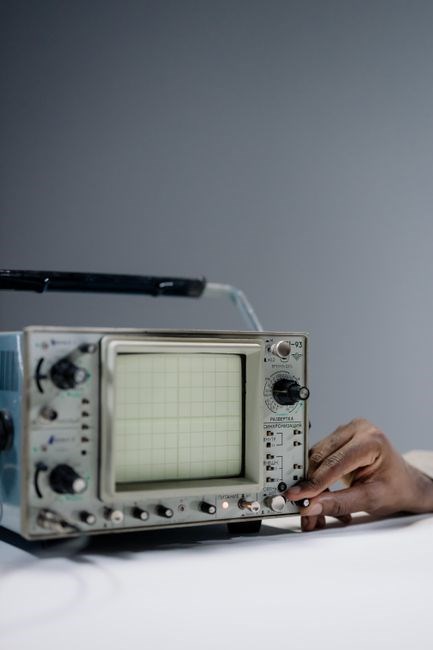
The art of electronics pdf serves as a comprehensive guide that bridges foundational theory with actionable design strategies, catering to both newcomers and seasoned professionals. Its primary purpose is to demystify complex concepts—such as impedance matching, noise analysis, and power‑management—while simultaneously offering step‑by‑step tutorials that culminate in tangible prototypes. By integrating real‑world case studies, the document demonstrates how classic analog techniques can coexist with modern digital signal processing, thereby illustrating the continuum of innovation that defines the field. The scope extends beyond mere circuit schematics; it encompasses component selection, simulation workflows, and best practices for PCB layout, ensuring readers acquire a holistic skill set. Additionally, the pdf emphasizes iterative development, encouraging experimentation, debugging, and refinement through a structured learning cycle. It also provides a curated list of open‑source tools and libraries, empowering users to validate designs in virtual environments before committing to hardware. Ultimately, the resource aims to cultivate a mindset of curiosity, precision, and resilience, equipping engineers to tackle emerging challenges—from low‑power IoT devices to high‑frequency RF modules—while fostering an appreciation for the historical lineage that informs contemporary practice. The PDF also includes a curated bibliography of seminal works, detailed lab manuals, and a glossary of terms to ensure clarity and depth for every reader. for future projects.!
Core Topics in Electronics PDFs
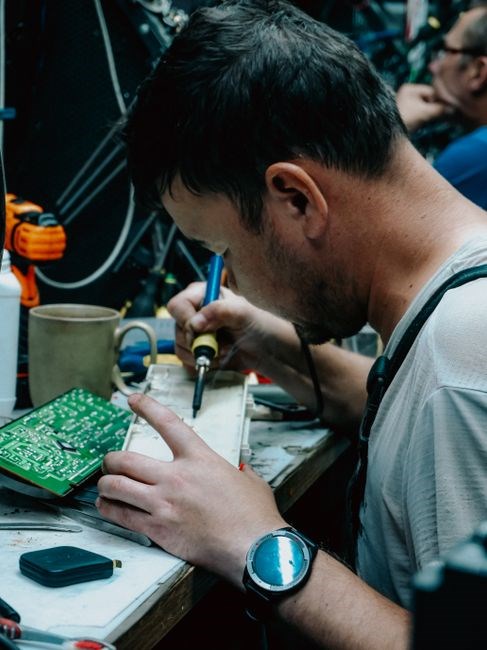
The art of electronics pdf delves into analog fundamentals, digital signal processing, and embedded systems, offering design insights, practical examples, and simulation guidance to empower engineers across all skill levels. It covers simulation tools debugging help!
Analog Circuit Design
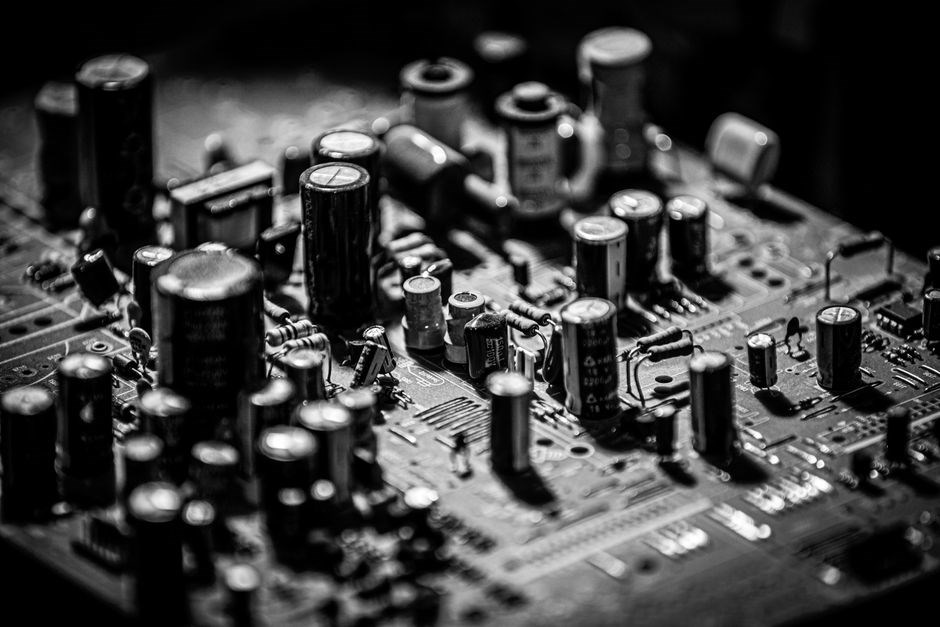
The art of electronics pdf offers a deep dive into analog circuit design, covering foundational concepts such as voltage dividers, biasing techniques, and the intricacies of transistor operation. It explains how to construct low‑noise amplifiers, precision voltage references, and robust power‑management stages. The guide emphasizes the importance of component selection, layout considerations, and thermal management to ensure signal integrity and long‑term reliability. Practical examples illustrate the design of common‑mode rejectors, differential amplifiers, and active filters, with step‑by‑step calculations and simulation screenshots. Readers learn to apply feedback principles, analyze stability margins, and optimize frequency response. The document also discusses advanced topics like op‑amp non‑idealities, slew rate limitations, and the impact of parasitic capacitances; By integrating theory with hands‑on projects, it equips engineers to prototype, test, and iterate circuits efficiently. The pdf encourages the use of simulation tools such as LTspice or PSpice, providing sample netlists and troubleshooting tips. It concludes with best practices for documentation, schematic capture, and PCB layout, ensuring that each design transition from concept to production is smooth and error‑free. This section serves as a comprehensive resource for anyone seeking to master the art of analog electronics. By combining theory, simulation, and hands‑on experimentation, readers gain confidence to tackle complex projects innovate electronicsnow
Digital Signal Processing
The art of electronics pdf delves into digital signal processing (DSP) fundamentals, bridging theory with practical implementation. It begins with sampling theory, explaining Nyquist criteria, aliasing, and anti‑aliasing filters. The guide then covers discrete‑time signal representation, z‑transform, and frequency domain analysis. Readers learn to design FIR and IIR filters, exploring windowing techniques, Butterworth, Chebyshev, and elliptic structures. The text demonstrates how to implement these filters in software using MATLAB or Python, providing code snippets and visualization of impulse, step, and frequency responses. It further explores adaptive filtering, LMS algorithms, and real‑time convolution. The pdf highlights the importance of quantization, fixed‑point arithmetic, and coefficient scaling to maintain numerical stability; Practical sections showcase DSP applications in audio equalization, image enhancement, and sensor data processing, complete with block diagrams and sample projects. The guide also introduces fast Fourier transform (FFT) algorithms, explaining radix‑2, split‑radix, and parallel implementations. Additionally, it covers digital modulation schemes such as QAM, PSK, and OFDM, including symbol mapping, pulse shaping, and channel equalization. By integrating theory, simulation, and hands‑on coding, the document equips engineers to design, test, and optimize DSP systems for embedded platforms, ensuring efficient performance and low power consumption. It guides readers from theory to prototype, ensuring reliable, efficient designs.!!!!
Embedded Systems
The art of electronics pdf offers a comprehensive exploration of embedded system design, starting with microcontroller fundamentals and progressing to advanced real‑time operating systems. It covers architecture selection, peripheral integration, and power‑management strategies, emphasizing low‑power, high‑efficiency solutions. The guide walks through firmware development cycles, from bootloaders to interrupt handling, and demonstrates best practices for memory management, stack usage, and debugging techniques. It introduces real‑time scheduling algorithms, such as rate‑monotonic and earliest‑deadline‑first, and explains how to implement them in lightweight RTOS kernels. The text also delves into communication protocols—UART, SPI, I²C, CAN, and Ethernet—providing detailed timing diagrams, signal integrity considerations, and example code snippets. It discusses sensor interfacing, analog‑to‑digital conversion, and calibration routines, ensuring accurate data acquisition. The pdf further explores security aspects, including secure boot, cryptographic libraries, and secure communication channels. It presents case studies of IoT devices, wearable electronics, and industrial automation, illustrating end‑to‑end design flows from schematic capture to PCB layout, simulation, and production testing. By integrating theory, simulation, and hands‑on projects, the document equips engineers to build robust, scalable embedded solutions that meet stringent performance and reliability requirements. This guide offers practical labs and code repositories for learning!!!!

Learning Pathways and Study Tips
Begin by mastering basic circuits, then progress to microcontroller programming, and finally tackle real‑time operating systems. Use hands‑on labs, simulate designs, and review code. Schedule regular practice, join forums, and document projects for continuous improvement.
Beginner Level
Start with the fundamentals: understand voltage, current, resistance, and Ohm’s law. Build simple resistor chains, LED indicators, basic amplifiers and small‑signal amplifiers for learning!! Keep a lab notebook to record components and observations!!
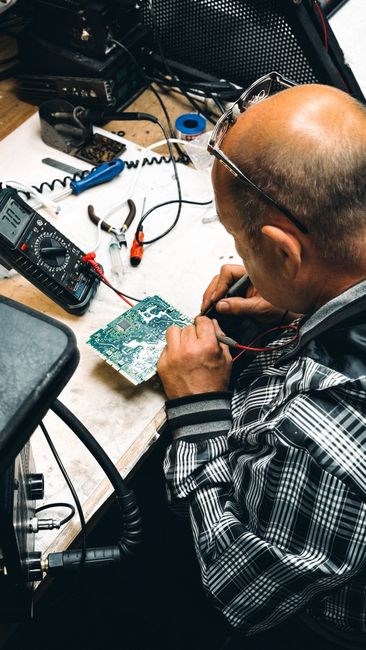
Learn to read datasheets—focus on pinouts, tolerances, and ratings. Practice interpreting symbols and circuit diagrams. Use tools like LTspice or TINA to model circuits before construction, saving time reducing waste.
Explore basic transistor configurations: common emitter, common collector, and common base. Build switch circuits and small‑signal amplifiers to see how biasing affects performance. Experiment with timing components—capacitors and inductors to create RC and RL filters.
Begin programming with microcontrollers: start with Arduino or ESP32. Write simple sketches that blink LEDs, read sensors, and communicate over serial. Understand digital logic levels, pull‑up/pull‑down resistors, and basic interrupt handling.
Set achievable projects: a temperature logger, a light‑controlled fan, or a basic radio receiver. Break each project into sub‑tasks: circuit design, component selection, firmware development, and testing. Celebrate small milestones to maintain motivation.
Finally, join online communities, attend local maker meetups, and collaborate on open‑source hardware. Sharing knowledge accelerates learning and exposes you to diverse problem‑solving approaches.
Intermediate Projects
After mastering basic circuits, tackle projects blending analog and digital domains, introduce feedback loops, and require component selection. These projects push your skill and expose you to real constraints.
- Active Filters – Design a second‑order Butterworth low‑pass or high‑pass filter with op‑amps. Compute component values for a target cutoff, simulate the response, and verify attenuation using a function generator and oscilloscope.
- Signal Conditioning – Interface a high‑impedance sensor to a microcontroller ADC; Use a differential amplifier, offset adjustment, and programmable gain. Add a low‑pass RC to reduce noise.
- PWM Control – Generate PWM from an MCU, implement dead‑time compensation, and read back motor speed. Use a PID loop to maintain constant velocity.
- Wireless Sensor Node – Design the PCB layout to minimize EMI, implement power‑saving modes, and develop firmware that transmits data over a mesh network. Test the node’s range.
- Analog‑to‑Digital Converter (ADC) Interface – Build a 12‑bit SAR ADC front end. Design the sample‑and‑hold circuit, reference ladder, and clock generator. Verify linearity, resolution, and settling time with a precision voltage source and oscilloscope.
Document each step: schematic capture, PCB layout, BOM, and test procedures. Use version control for firmware and keep a revision history for hardware changes. This disciplined approach prepares you for complex integration;

Advanced Projects
In this section we explore projects that demand mastery of multiple disciplines, rigorous testing, and robust design practices. They often involve high‑frequency signals, power electronics, or system‑level integration, pushing the boundaries of what a single engineer can accomplish.
- High‑Frequency RF Transceiver – Design a 2.4 GHz transceiver with a low‑noise amplifier, mixer, and power amplifier. Perform substrate selection, impedance matching, and electromagnetic simulation. Validate with a spectrum analyzer and measure spurious emissions.
- GaN Power Module Driver – Create a gate driver for a GaN H‑bridge. Optimize gate charge, dead‑time, and EMI filtering. Use a high‑speed op‑amp and test switching losses with a thermal camera.
- Real‑Time DSP Audio Processor – Implement a multi‑channel audio DSP on an FPGA. Include equalization, dynamic range compression, and convolution reverb. Verify latency and bit‑exactness using a high‑resolution oscilloscope.
- Autonomous Robotics Platform – Integrate LiDAR, vision, and inertial sensors on a single PCB. Develop firmware for sensor fusion, path planning, and motor control. Validate obstacle avoidance in a simulated environment.
- Quantum‑Inspired Computing Prototype – Build a superconducting qubit readout circuit. Design cryogenic amplifiers, flux bias lines, and readout resonators. Measure qubit coherence times with a vector network analyzer.
Each project should include a detailed design report, simulation data, test plans, and a risk assessment. Peer review and iterative prototyping are essential to achieve production‑grade reliability.
Supplementary Resources
Explore simulation suites, reference libraries, and community forums. Use LTspice, KiCad, MATLAB, and GitHub repositories for code snippets. Engage in webinars, workshops, and hackathons to deepen practical skills and network with peers. Collaborate on GitHub and share insights.!
Software Simulation Tools
Choosing the right simulation environment is pivotal for translating theoretical designs into functional prototypes. The landscape spans open‑source, commercial, and hybrid platforms, each offering distinct strengths. Below is a curated guide that aligns tool capabilities with typical workflow stages, from schematic capture to firmware validation.
- LTspice – Analog simulator for transient, AC, and noise analysis; verification.
- KiCad – Open‑source EDA suite with schematic capture, PCB layout, and 3D visualization.
- Ngspice – Command‑line SPICE engine supporting mixed‑signal and behavioral modeling.
- Altium Designer – Commercial powerhouse with advanced routing and real‑time design rule checks.
- Multisim – User‑friendly interface for analog, digital, and microcontroller emulation.
- MATLAB/Simulink – Ideal for algorithmic development and signal‑processing validation.
- Proteus – Microcontroller simulation paired with circuit behavior testing.
- Cadence Virtuoso – Industry standard for IC design with high‑frequency analog and RF workflows.
- Mentor Graphics PADS – Balanced solution for small‑to‑medium PCB projects with mixed‑signal simulation.
- EasyEDA – Web‑based platform merging schematic capture, PCB design, and simulation.
Integrate tools into a schematic capture, simulation, and firmware testing for designs!!.