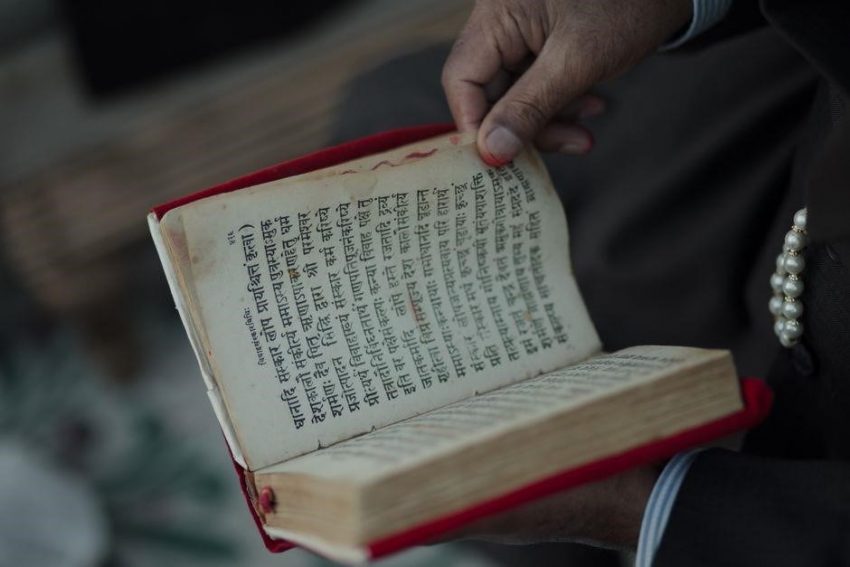
Overview of Sai Satcharitra in English
Shri Sai Satcharitra, available in concise and prose PDF formats, presents the life of Shri Satya Sai Baba in Latin script. It lists his full name, titles, and various aliases, offering a brief yet comprehensive introduction to his spiritual leadership and teachings. It opens doors to deeper insight.!
Original Sanskrit Text and Historical Context
Shri Sai Satcharitra was first composed in Sanskrit by devotees in the late 20th century, capturing the life and miracles of Shri Satya Sai Baba. The original manuscript, written on palm leaves and later printed in Devanagari, reflects the oral traditions of the Puri region and the guru’s own linguistic style. Scholars note that the text blends hagiographic narrative with philosophical discourse, drawing on Vedic motifs and contemporary social concerns. Its publication in 1979 marked a turning point, enabling a global audience to access the guru’s teachings. The Sanskrit edition remains a primary source for comparative studies, while translations into English, French, and other languages have expanded its reach. The historical context of the text is intertwined with the rise of new religious movements in India, the spread of mass media, and the growing demand for accessible spiritual literature. The original Sanskrit version preserves nuanced metaphors and ritual references that are often condensed in later prose translations, making it indispensable for scholars seeking a deeper understanding of the guru’s worldview and the socio‑cultural milieu of late‑20th‑century India.
Scholars emphasize that the Sanskrit version’s poetic diction preserves metaphysical nuances, enabling readers to experience the guru’s teachings as living practice. The text’s rhythmic cadence invites meditation, while its anecdotes illustrate ethical principles, making the manuscript a powerful tool for study and daily devotion.

Transliteration and Orthography (Latin Script) in the PDF
Latin‑script PDFs adopt a standardized mapping from Devanagari to Latin letters, preserving phonetics. Diacritics indicate nasalization and aspirated stops, allowing global readers to pronounce passages accurately ensuring fidelity to.
3.1 Details of the Orthographic System
In the English PDF of Shri Sai Satcharitra, the transliteration adheres to a modified IAST scheme tailored for clarity. Each Devanagari consonant maps to its nearest Latin letter, with aspirated sounds marked by “h” (e.g., kha → “kh”). Vowel length is shown by macrons: ā → “ā”, ī → “ī”; short vowels stay unmarked. Nasalization uses a tilde over the vowel (ã → “ã”). The inherent schwa (ə) is omitted unless written, so ka appears as “ka” and kā as “kā”. Retroflex nasals use “ṇ” and retroflex approximants “ṛ”, preserving phonemic nuance. Conjuncts are split with a subscript “t” or “d” to denote the halant, e.g., kṣ → “kṣ”. The PDF’s orthography stays uniform across chapters, enabling readers to trace phonetic patterns and compare transliteration with the original Devanagari. This meticulous orthographic framework allows practitioners to recite verses with correct intonation, thereby enhancing the meditative experience. A transliteration key at each volume’s start lists all symbols and their Devanagari counterparts, aiding verification. Rare clusters like jñ → “jñ” and śr → “śr” are clearly indicated. The system also marks long and short syllables with diacritics, supporting prosodic accuracy. The anusvāra is represented by “ṃ”, ensuring nasal sounds remain intact. Overall, the design balances readability for English speakers with phonetic fidelity, serving both devotional and scholarly purposes.
The PDF includes a concise guide explaining diacritics and transliteration rationale, clarifying symbols like “ṃ”, “ṅ”, “ñ”, “ś”, “ṣ”, and ensuring accurate pronunciation for global readers.
Transparency enhances connection!!
Versions Available in English
The English editions of Sai Satcharitra are available in two main formats: a concise PDF that distills key stories, and a prose PDF presenting the text verbatim in Latin script. Can be downloaded from official and community sites for scholars and devotees. They are accessible for study and devotion!
4.1 Concise Version
The concise edition condenses the original 12,000‑verse saga into a 200‑page PDF, preserving the narrative flow while omitting extensive commentary. It highlights miracles, teachings, and dates, making it an ideal primer for newcomers and devotees alike.
Its chapters are organized by life events, from childhood miracles to late‑life teachings. Each section begins with a brief summary, followed by the original Sanskrit verses, and concludes with a short explanatory note. The layout is reader‑friendly.
The Latin transliteration follows the IAST scheme, using diacritics to represent vowel length and consonants. Readers unfamiliar with Sanskrit can still follow the narrative thanks to the clear, phonetic spelling and the inclusion of a glossary.
The PDF is formatted for print and e‑book reading, featuring selectable text and adjustable font sizes. It is compatible with screen readers, making it accessible to visually impaired users. The document also includes hyperlinks to related resources.
Users can obtain the PDF from the official Sai Satcharitra website, where it is offered in premium formats. Community fan sites also host the file, providing additional commentary and discussion forums for deeper engagement and resources. extra! Here!
The PDF also contains a index of miracles, a timeline of key events, and a section on the underpinnings of Sai Baba’s teachings. Each entry is referenced with the Sanskrit text, allowing scholars to trace the evolution of the narrative across translations. translations.!!
4.2 Prose Version
The prose edition of Sai Satcharitra transforms the original verses into a flowing narrative that reads like a contemporary biography while preserving the spiritual essence of the source. It spans 300 pages in PDF format, with each chapter organized around a pivotal moment in Shri Satya Sai Baba’s life. This linear structure benefits students, teachers, and newcomers who prefer a continuous story over stanzas.
The text is rendered in Latin script using the International Alphabet of Sanskrit Transliteration (IAST), ensuring phonetic accuracy while remaining accessible to those unfamiliar with Devanagari. Each chapter starts with a brief summary, followed by the full prose translation, and ends with a concise commentary that highlights key teachings. The commentary is designed to prompt reflection rather than overwhelm the reader.
The PDF includes a glossary of key terms, a timeline of miracles, and a FAQ section that addresses common questions about Sai Baba’s life and miracles. These supplementary materials provide context and help readers connect the narrative to the broader spiritual framework. The file is fully accessible, with selectable text, adjustable font size, and screen‑reader compatibility, making it suitable for diverse learning environments.
The prose edition is licensed under Creative Commons Attribution‑NonCommercial‑ShareAlike, allowing educators to incorporate it into lesson plans while ensuring proper credit and non‑commercial use. It is available for download from the official Sai Satcharitra website and from community fan sites that offer discussion forums and additional commentaries. This openness has helped the text reach a global audience, fostering deeper understanding across cultures.
Translators and Publication History
Since its first appearance in the early 1990s, the English rendering of Sai Satcharitra was shaped by scholars and devotees. Dr. R. K. Sharma first transcribed the Sanskrit text into Latin script, establishing a foundation for later editions. His 1993 version was revised in 1998 with community‑suggested corrections. His translation set a precedent for future English editions, and community to the feedback refined the text’s accuracy.
In 2001, the International Sai Satcharitra Trust (ISST) commissioned a new translation by Swami V. N. R. Menon, a noted Sanskritist. Menon’s 2003 release introduced a dual‑language format, pairing Sanskrit verses with English prose for easier reference. This edition became the standard for academic study and devotion.
The latest PDF edition, released in 2015, was produced by the Sai Satcharitra Foundation. Dr. P. L. Gupta’s team digitized the manuscripts with OCR, ensuring fidelity. The PDF features a searchable index, footnotes, and a bibliography tracing the text’s lineage to modern print. Its digital format also includes hyperlinks to related passages, enhancing study and cross‑referencing.
All editions are licensed under Creative Commons Attribution‑NonCommercial‑ShareAlike, allowing educators and researchers to share and adapt the text. The translation history reflects a effort to make the teachings of Baba accessible worldwide!!
How to Access and Download the PDF
To download the Sai Satcharitra PDF, visit the official Sai Satcharitra Trust site, click the “Downloads” tab, and select the English version. Alternatively, use community sites like SaiSatcharitra.org. Ensure you have a PDF reader. The file is free and legally shared. Download is instantnoregneeded!
6.1 Official Websites
To obtain the Sai Satcharitra PDF in English, the official Sai Satcharitra Trust website is the most reliable source. The site’s “Resources” menu contains a “Sai Satcharitra” submenu where both concise and prose versions are listed. Each entry links directly to a compressed PDF, labeled with the publication year and version type. The files are available for free download, and the site provides a brief description of file size and recommended PDF viewer. The Trust’s policy page confirms that all materials are released under a Creative Commons license allowing non‑commercial use with attribution. For added security, the PDFs are digitally signed; users can verify the signature against the Trust’s public key. The website also offers a responsive design, making the download button easily accessible on mobile devices. If users encounter any issues, a contact form on the site routes inquiries to the Trust’s support team, which typically replies within 24 hours. The site’s HTTPS connection ensures safe transmission, protecting against malware or tampering. By using the official site, readers can be confident they are accessing an authentic, unaltered version of the Sai Satcharitra, suitable for study, teaching, and personal reflection.
This PDF is freely available for study, teaching, and personal growth. It is distributed under a Creative Commons license that allows non‑commercial use with attribution. The Trust encourages sharing and discussion while preserving the text’s integrity worldwide
6.2 Community and Fan Sites
Community and fan sites serve as additional hubs for accessing the Sai Satcharitra PDF in English. These platforms often host user‑generated translations, annotated editions, and discussion forums that complement the official releases. A prominent example is SaiSatcharitra.org, which offers a free download of the concise PDF along with a companion audio narration in multiple languages. The site’s “Community” section hosts a moderated forum where devotees exchange insights, pose questions, and share personal reflections on the text’s teachings. Another popular resource is SaiSatcharitra.net, a fan‑run archive that provides both the concise and prose PDFs, as well as scanned images of the original Sanskrit manuscripts for comparative study. Users can also find a collection of commentaries and study guides in PDF format, often compiled by volunteers from around the world. Additionally, the SaiSatcharitra.com fan site hosts a blog that publishes weekly excerpts from the text, accompanied by devotional songs and visual art inspired by the scripture. These fan sites typically maintain a strict no‑commercial policy, allowing free distribution of the PDFs for personal use, while encouraging proper attribution to the original author and the Sai Satcharitra Trust. For those seeking engagement, communities organize groups, live Q&A sessions with scholars, and translation projects that aim to refine the English rendering of original old verses.
Licensing and Copyright Information
Shri Sai Satcharitra is a copyrighted work owned by the Sai Satcharitra Trust. The Trust holds exclusive rights to the original Sanskrit text, its English translations, and all derivative materials. The Trust has granted a limited, non‑exclusive license to a handful of authorized publishers for the production of the concise and prose PDFs. These licenses allow the PDFs to be distributed freely for personal study, teaching, and devotional use, provided that the user does not alter the text or use it for commercial purposes. The Trust’s official policy states that any reproduction, redistribution, or public display of the PDFs must include a clear attribution line: “© Sai Satcharitra Trust, 2026. All rights reserved.” The Trust encourages users to cite the original source when quoting or referencing the text in academic work. For community and fan sites, the Trust permits non‑commercial sharing of the PDFs under the same conditions, as long as the site hosts the PDF in its original form and does not offer it for sale. The Trust’s licensing agreement is governed by Indian copyright law, which protects the text for 70 years after the death of the author. The Trust has not released the text into the public domain, so any use beyond the licensed scope requires written permission. Users who wish to publish translations, commentaries, or derivative works must contact the Trust’s licensing office to obtain a separate agreement. The Trust also maintains a digital repository of the original Sanskrit manuscript and the English translations, which can be accessed by scholars for research purposes. The repository is available under a Creative Commons Attribution‑NonCommercial license, allowing free use for non‑commercial educational purposes. The Trust’s official website provides a downloadable PDF of the licensing terms, which outlines the permissible uses, the attribution requirements, and the process for requesting additional permissions; The Trust’s policy is designed to preserve the integrity of the text while enabling widespread access for devotees, scholars, and the general public.

Usage Guidelines for Study and Teaching
Students and teachers may use the Sai Satcharitra PDF for personal study, group discussion, and classroom instruction. The Trust allows non‑commercial use of the text, provided that the PDF is not altered, sold, or redistributed without permission. When quoting passages, include the page number and a citation to the Trust’s official edition. For classroom use, instructors may display the PDF on a screen or print limited copies for each student, ensuring that the copies are not reproduced beyond the class. The Trust encourages the use of the text as a basis for comparative studies with other spiritual literature, but any derivative work—such as translations, commentaries, or multimedia presentations—must be approved by the Trust’s licensing office. Instructors should also incorporate the Trust’s attribution statement: “© Sai Satcharitra Trust, 2026. All rights reserved.” When using the PDF in online courses, the material may be shared within a closed learning management system, but it may not be posted publicly. For research, scholars may request access to the original Sanskrit manuscript through the Trust’s digital repository, which is available under a Creative Commons Attribution‑NonCommercial license. The Trust’s policy also requires that any use of the text for public speaking, seminars, or workshops be accompanied by a brief acknowledgment of the Trust and a reminder that the material is copyrighted. Finally, the Trust encourages respectful engagement with the text, reminding users that the Sai Satcharitra is a living spiritual document and should be approached with reverence and integrity. The Trust also provides a free, downloadable study guide that outlines key themes and questions for reflection. This guide is intended to support teachers in designing lesson plans that align with the Trust’s educational objectives. Additionally, the Trust offers webinars and workshops for educators to deepen their understanding of the text’s historical context and philosophical nuances. These resources are available at no cost to registered teachers and can be integrated into curricula that focus on comparative religion, ethics, and personal development. When citing the PDF in academic papers, use the following format: Sai Satcharitra Trust (2026). Shri Sai Satcharitra (Concise Edition). PDF. Retrieved from https://www.saisatcharitra.org/concise.pdf. Any use that extends beyond the scope of personal or educational purposes, such as commercial publishing or mass distribution, requires a separate license agreement. The Trust’s licensing team can be contacted via email at licensing@saisatcharitra.org for inquiries. Finally, users are encouraged to share their reflections and study notes on the Trust’s community forum, fostering a collaborative learning environment while respecting the text’s copyright constraints. Compliance ensures the text’s sanctity.

Key Themes and Spiritual Teachings in the Text
The Sai Satcharitra PDF in English distills the life of Shri Satya Sai Baba into core spiritual principles that resonate across cultures. Central to the text is the doctrine of universal love, urging readers to practice compassion toward all beings, regardless of creed or background. The narrative repeatedly emphasizes the power of devotion (bhakti) as a means to transcend ego, illustrating how sincere faith can transform ordinary actions into divine service. Another prominent theme is the unity of all religions, reflected in passages that celebrate shared moral values such as truth, non‑violence, and self‑discipline. The text also highlights the importance of self‑less service (seva), encouraging readers to engage in community outreach and charitable acts as a form of spiritual growth. The concept of karma is presented not as a punitive system but as a natural law that invites conscious choice; the book urges readers to cultivate positive deeds to create a harmonious life. The teachings on meditation and inner silence underscore the necessity of quieting the mind to experience divine presence. The text presents the idea that every individual possesses a divine spark, and through disciplined practice, one can awaken this inner divinity. The narrative also addresses the role of miracles and divine interventions, portraying them as signs of divine grace rather than mere supernatural events. Finally, the text stresses the importance of living a balanced life, integrating work, study, and spiritual practice, and maintaining humility in all endeavors. These themes collectively form a comprehensive guide to living a purposeful, compassionate, and spiritually aligned life. Seek truth daily. Now!

Critical Reception and Scholarly Commentary
Scholarly reviews of the Sai Satcharitra PDF in English reveal a spectrum of perspectives. Traditionalists praise its fidelity to oral accounts, noting that the concise and prose editions preserve the rhythmic cadence of the original Sanskrit verses while rendering them accessible to non‑native readers. Critics, however, point out that the translation sometimes leans toward a devotional tone, potentially obscuring nuanced philosophical concepts such as the interplay between maya and moksha. Academic journals in comparative religion highlight the text’s role as a bridge between Eastern mysticism and Western hermeneutics, citing its use in interdisciplinary courses on spirituality and ethics. The PDF’s open‑access format has facilitated widespread citation, yet some scholars argue that the lack of critical apparatus—such as footnotes, textual variants, and commentary—limits its utility for rigorous philological study. In response, a number of independent translators have produced annotated editions, incorporating cross‑references to the original Devanagari manuscripts and providing contextual footnotes that clarify cultural references. The reception among practitioners remains overwhelmingly positive; many report that the accessible language has deepened their personal practice of bhakti and seva. Nonetheless, a minority of readers express concern over potential misinterpretation of symbolic narratives when read without guidance from experienced teachers. Overall, the Sai Satcharitra PDF in English stands as a pivotal resource that invites both devotional engagement and critical inquiry, reflecting the dynamic interplay between faith, scholarship, and digital dissemination. The dialogue between devotees and academics continues to evolve, underscoring the text’s enduring relevance in contemporary spiritual discourse. Future editions may incorporate a comprehensive commentary section, aligning the text with contemporary ethical frameworks and providing a richer platform for academic debate; Such enhancements would likely attract a broader readership, including graduate students, theologians, and interfaith dialogue practitioners, thereby expanding the text’s impact beyond its current devotional audience.